

AI in live music is already at work in the places most concertgoers never see. It is in the sound desk, in the lighting rig, in the ticket queue and in the gate, long before the first note is played. It does not sing the songs or replace the band. It takes on the fiddly, fast and repetitive jobs around a performance.
A concert is a hard place for technology. The room changes when the crowd arrives, because thousands of bodies absorb sound in a way an empty hall does not. Microphones pick up drums, speakers and crowd noise as well as the voice they are meant to carry. Each problem involves fast decisions about large amounts of detail, which is why software has found a place there.
This article looks at what AI in live music does today: clearing vocals, helping lights and visuals follow a performance, shaping tickets and entry, and labelling recordings that used AI. It also looks at the limits, because a tool that works in one room can fail in another.
Where AI in live music shows up first
The first place most fans meet AI in live music is before they reach the venue. Ticket platforms forecast demand by event, date and seat section, so organisers can set and adjust price tiers rather than guessing from last year's sales. Suggestion tools match listings with past purchases and location, and chat assistants answer routine questions about transfers, refunds and entry rules.
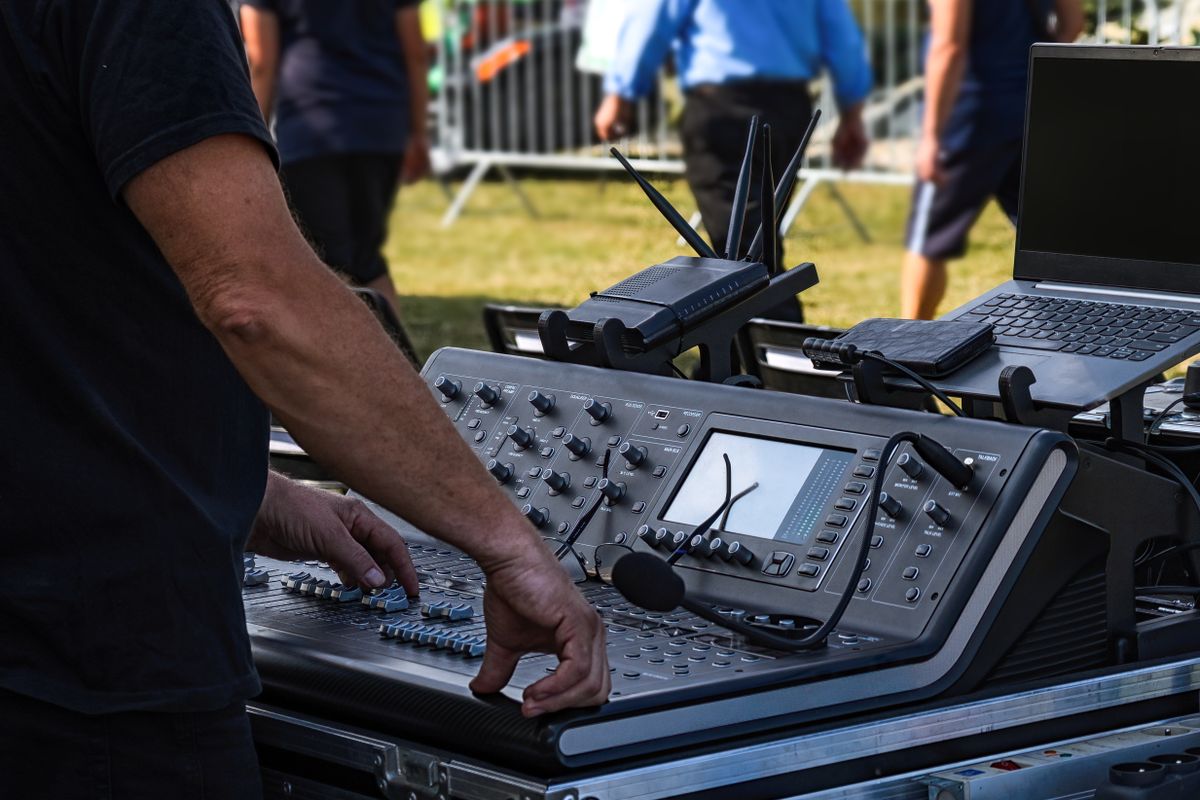
The second place is the sound desk. A live mix must cope with a room that changes as it fills, with instruments bleeding into vocal microphones and speakers feeding sound back into the stage. Software can watch the audio as it happens and flag a frequency that is about to feed back, so the engineer can correct it before the audience hears the problem.
Clearer vocals on a loud stage
Vocals are the hardest part of a live mix to get right. A singer's microphone hears everything around it: drums, guitars, sound spilling back from the speakers, and the room echoing it all back. In the past, engineers used filters that could dull the voice, gates that could cut it off too early, or stage layouts that kept performers away from the audience.
L-Acoustics' Source Intelligence takes a different approach. It is a real-time vocal tool that runs on the company's L-ISA Processor II and uses a machine-learning algorithm to identify the voice in a microphone signal and remove everything else. Its maker says it removes crowd noise, instrument bleed, speaker spill and room reflections, and cuts non-voice signal by up to 40 decibels. MusicTech gives the same figure and notes that less unwanted sound also reduces the risk of feedback.
Timing matters as much as the cleaning. L-Acoustics states end-to-end latency under 8.5 milliseconds over MADI, a common digital audio connection, judged by its engineers to be within tolerable limits for front-of-house use. The system is focused on voice only and processes up to four channels at once, so it suits a lead vocal or a small group of vocal channels rather than a whole band.
There are limits worth stating plainly. The tool only works inside L-Acoustics systems, and it cleans a vocal; it does not write a song or decide what a mix should feel like. Its test results come from the maker and field engineers on major tours and Broadway shows.
Lights, visuals and shows that answer the room
Lighting has always been part of the music, not just decoration around it. A good lighting director can make a chorus feel large and a quiet song feel close, by timing colour and movement to the sound. Software now helps with the timing: production writers describe lighting systems that follow tempo changes and stage movement and keep video in step, so repetitive cue work is handled by the desk.
The same idea is reaching the stage itself. In Manchester, a new opera called Ghost of the AI Empire, due at the Cosmo Rodewald Concert Hall on Friday 6 November 2026, invites its audience to shape the story live. Audience members take part anonymously using their phones, and their choices affect scenes as the performance unfolds: during a boat journey, they can calm or raise a storm, which influences whether a fugitive reaches land. An intelligent-stage system responds to the collective mood in the hall, and even the cast will not know in advance how the story ends.
The production, created by Dr Alexandra Huang-Kokina of the University of Manchester and Operactive Arts, reimagines the Japanese ghost legend Yotsuya Kaidan in a future ruled by an AI empire, mixing Japanese Noh theatre with European opera. Live singers and musicians perform in English and Japanese, with English surtitles. The university's account stresses that the artists remain in full creative control: the system reacts, but people perform.
Tickets, entry and crowd flow
Tickets are where AI in live music meets the most people, and where its effects are most mixed. Models can separate genuine fans from automated traffic during high-demand sales and flag suspicious accounts and payment attempts. That matters because bots can take seats in seconds and leave real fans facing resale prices. Rotating mobile tickets and account-linked entry also make transfers traceable and counterfeits harder to pass off.
Ticketmaster's business pages report that use of biometric entry doubled across global markets in 2024, as venues looked to improve entry efficiency and security. Through its Nexus partner programme, venues can use facial-recognition tools from partners such as Wicket, which lets fans move through entry gates in seconds after a quick scan, with no paper ticket to find and no barcode to pull up on a phone. Self-service entry integrations rose by 66% in 2024, according to the same account.
The cautions are just as concrete. A market research account of online event ticketing warns that filters built to block bots can also block real fans, so human review of flagged cases remains part of the process. Dynamic pricing, where prices move with demand, draws scrutiny from consumers, and personal data used in ticketing models is subject to privacy rules that restrict how it can be applied. Face checks add a further question: a fan who opens a phone with a face may still want to know what a venue stores, for how long, and who can see it.
For fans, the advice is simple: buy from the seller or channel the artist and venue name, keep the ticket in the account it was bought with, and check the venue's entry page before travelling. For small promoters, start with fraud checks and clear entry information before spending on face-based gates.

Labels, consent and keeping the human in charge
The recorded side of music now has its own AI question: when a listener presses play, how much of what they hear was made by a person? On 10 July 2026, music bodies announced a voluntary track-labelling system for sound recordings, backed by IFPI, the Recording Industry Association of America, A2IM, WIN, IMPALA, the Grammys, SAG-AFTRA and the Human Artistry Campaign.
The system has two labels. AI-Generated applies where generative AI made the entirety or the primary portion of a recording's creative elements, including an AI lead vocal, a key instrumental performance made by AI, or music generated entirely from a prompt. AI-Assisted applies where a recording was created substantially by humans, with AI used for some expressive elements, and where humans performed the lead vocal and primary instruments.
The announcement also shows the scale of the issue. It cited Deezer reporting that AI-generated tracks made up 44% of all new music delivered to its platform, and Apple Music saying that more than one-third of tracks uploaded to its platform were fully AI-made. The labels have a clear boundary, though: they do not cover AI use in lyrics, composition, music videos or cover art, only in sound recordings, and they are voluntary, so a listener cannot assume every track carries one yet.
Consent runs through the same debate. SAG-AFTRA, one of the backers, has stressed that AI should not be used to replace, imitate or exploit artists without consent and fair compensation. For a small act or venue, the working rules follow: get permission before using someone's voice or likeness, and keep a record of which tools were used on a recording.
A careful way for a small venue or act to use AI in live music is to start with one job that is easy to check: clearer vocals, faster entry or better lighting cues. Measure whether the night actually ran better, keep a person in charge of every decision the system touches, and tell the audience what is in use, in plain words.
Frequently asked questions
Does AI in live music replace musicians?
No. The examples here show AI working around performers, not instead of them: cleaning a vocal, timing lights, checking tickets and forecasting a crowd. In the Manchester opera, singers and musicians perform live and artists remain in full creative control.
Will face checks at concert gates become normal everywhere?
Not necessarily. Ticketmaster reports biometric entry use doubled in 2024, and some venues now pass fans through gates in seconds. But privacy rules differ by place, some fans prefer a ticket or card, and a wrongly flagged fan creates a problem at the door.
How can a listener tell if a recording used AI?
Look for the new AI-Generated and AI-Assisted track labels, which mark whether AI made most of a recording or assisted human performers. Remember their limits: they cover sound recordings only, not lyrics, composition, music videos or cover art, and they are voluntary.
AI in live music works best in its proper place: a capable helper for sound, light, tickets and planning, with people making the artistic and safety decisions. The vocal tool, the gate and the label all share the same test: do they make the night better and fairer, without taking away the human performance at the centre of it?
If you run a small venue, a band or a community event, start with one clear job, keep a person in charge, and tell your audience what you are using. If you need help putting that kind of system in place, take a look at our services, or get in touch through our contact page.
What to watch next
Watch whether the AI-Generated and AI-Assisted labels appear on the streaming services you use, and whether they spread beyond sound recordings. Watch whether face-based entry keeps growing as privacy rules settle, and whether more shows let the audience shape the night.
Sources
- L-Acoustics — Source Intelligence – Vocal Clarity for Live Sound — date checked: 2026-11-04 — https://www.l-acoustics.com/products/source-intelligence/
- MusicTech — L-Acoustics announces Source Intelligence for vocal isolation in live environments — date checked: 2026-11-04 — https://musictech.com/news/gear/l-acoustics-source-intelligence-l-isa/
- Live Music Blog — How AI Is Changing Live Music Production Behind the Scenes — date checked: 2026-11-04 — https://livemusicblog.com/ai-changing-live-music-production/
- Ticketmaster Business — Biometric Entry Is Transforming Live Event Access For Fans And Venues — date checked: 2026-11-04 — https://business.ticketmaster.ie/biometric-entry-is-transforming-live-event-access-for-fans-and-venues/
- Value Market Research — Online Event Ticketing Market Size & Forecast | 2034 — date checked: 2026-11-04 — https://www.valuemarketresearch.com/report/online-event-ticketing-market
- University of Manchester — Groundbreaking new opera shapes the story live based on audience mood — date checked: 2026-11-04 — https://www.manchester.ac.uk/about/news/manchester-bicentenary-fellow-creates-groundbreaking-new-opera-whose-audience-shapes-the-story-live/
- RIAA — Music Community Introduces New Labeling Program To Distinguish Generative AI in Sound Recordings — date checked: 2026-11-04 — https://www.riaa.com/news/music-community-introduces-new-labeling-program-to-distinguish-generative-ai-in-sound-recordings/?ref=hackernoon.com

Eri-Tech Global Ltd
Eri-Tech Global Ltd is a digital solutions company working with small businesses and growing brands. Learn more at /about.