AI in animation is software that helps make cartoons and animated films: sketching storyboards, filling the frames between key poses, adding colour and painting backgrounds. It does not draw a finished film on its own. In most studios it works beside artists, and the choices that shape a story — the joke, the pause, the look on a character's face — still come from people.
The change is real, and it is fast. A January 2024 study of 300 entertainment executives estimated that about 21.4% of film, television and animation jobs in the United States — roughly 118,500 — could be consolidated, replaced or removed by generative AI by 2026. Studios say the tools take over the slowest, most repetitive parts of the work. This guide explains where AI fits in the animation pipeline and how the people who make cartoons are responding.
How a cartoon was made before AI
Traditional animation, known as cel animation, took shape in the early 1920s and still sets the shape of the work today. A character is drawn on a clear sheet, placed over a painted background and photographed; change the drawing a little, photograph again, and the character appears to move. Disney's Snow White and the Seven Dwarfs, released in 1937, needed more than 200,000 hand-drawn frames, according to a 2025 survey of the field.
The work is split into stages, each with its own craft. Pre-production covers the script, the look of characters and settings, and the storyboard — small drawings that set out the composition, acting and timing of each scene. Production moves to layout, which fixes framing and perspective, then to keyframe animation: the lead animator draws the key poses, a second animator refines them, and assistants draw the in-between frames that join one pose to the next. Then come colouring, compositing, cutting, music and dubbing.
Computers have been part of this chain since the 1980s. Disney's Computer Animation Production System, built with Pixar, automated colouring and compositing for Beauty and the Beast (1991) and The Lion King (1994). But those tools stayed in a supporting role: they helped artists do the same jobs faster. Generative AI is different because it takes part in the drawing itself, producing frames, colour and backgrounds that no hand has drawn.
Where AI helps first: storyboards, in-betweens and colour
The first places AI is used are the steps with the most repetition. Storyboarding is one of them: tools such as Storyboarder.ai can turn a written scene description into storyboard frames, giving a director a rough version of a scene in minutes rather than days. The director still decides what the scene means, but the first draft of the pictures arrives faster.
In-betweening is the step most often named. In traditional 2D animation, a lead animator draws the key poses and an assistant draws the frames in between. Tools now do part of it: AniDoc uses video diffusion models to fill in frames and add colour, while ToonCrafter handles the exaggerated, non-linear movement of cartoons. None of these is finished work on its own: the survey describing them also lists the problems that remain, including keeping a character looking the same from shot to shot and keeping motion smooth over time.
Colouring follows the same pattern: once colours are set, AI can apply them across frames and clean up rough lines. Backgrounds are the most public example so far. In January 2023, Netflix Japan released The Dog and the Boy, a three-and-a-half-minute short made with Wit Studio and the AI company Rinna. Its backgrounds began as hand-drawn layouts, were passed through AI generation twice, then revised by hand, and the credits listed the background designer as "AI (+ Human)".
Netflix presented the short as an experiment to help an anime industry facing a shortage of workers. The reaction from artists was sharp. Many argued there was no real shortage and that the problem was pay. Others objected that image models are trained on human-made work taken without permission or credit. The short shows the pattern that has since become normal: a person sketches, the software makes a pass, and a person fixes the result.
3D animation and the studio pipeline
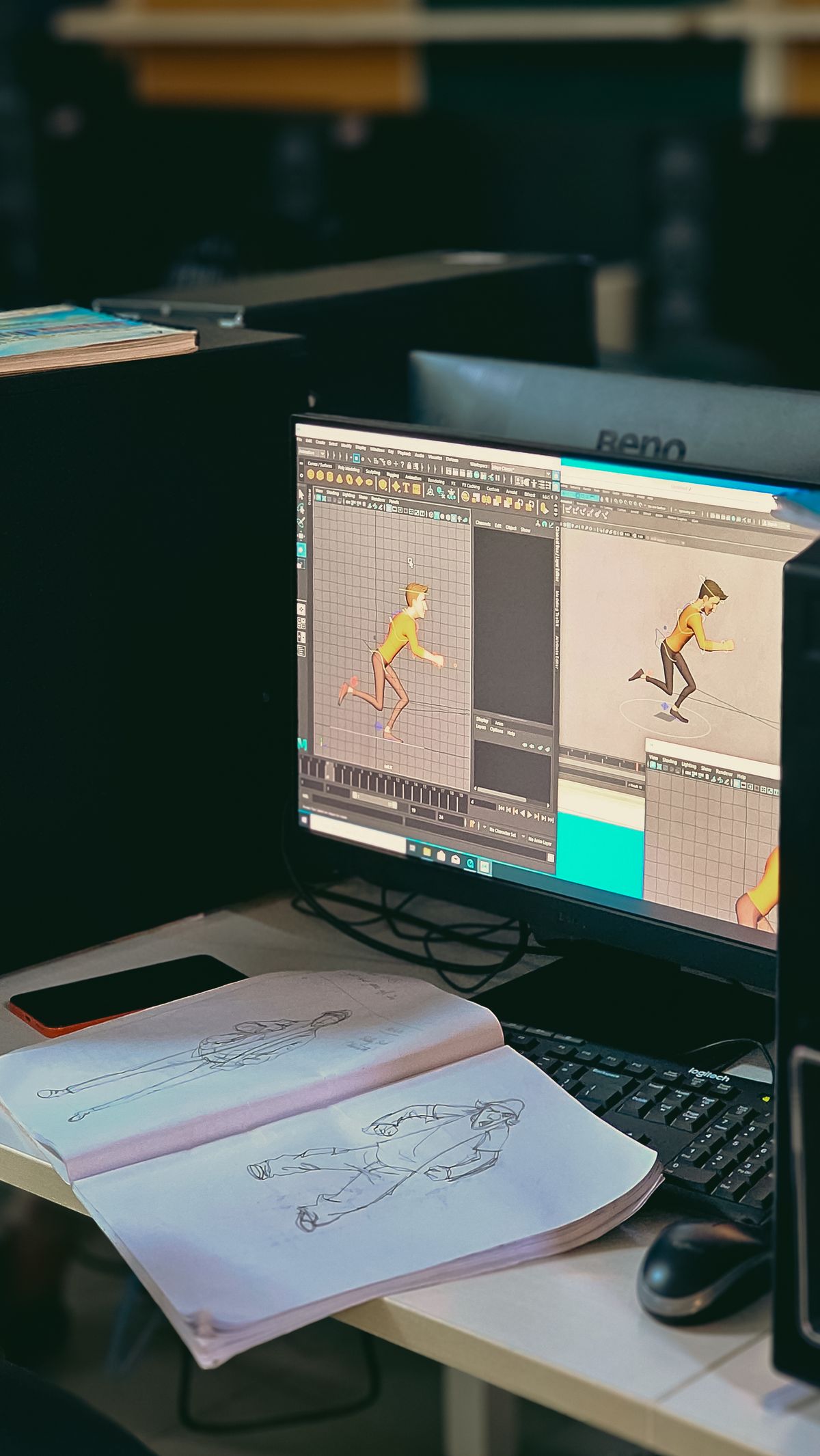
In 3D animation the pattern is similar, but the jobs are different. A 3D character must be modelled, given a skeleton and weighting, and moved by hand or from motion-capture data. AI tools now generate base models from text or images, propose the skeleton and weighting, and clean up motion-capture data, turning days of setup into a shorter task an artist then refines.
The industry's own expectations point the same way. In the survey behind "Future Unscripted", 47% of executives said generative AI would be effective at generating 3D assets within three years, 44% said the same about realistic foreign-language dubbing, and 39% about music mixes and masters. More than 90% expected a larger role over the next three years, and only 26% felt their workforce was fully prepared.
What has not changed is the need for control: a studio cannot ship a frame that flickers, a character whose face changes between shots, or a movement that breaks the laws of physics. The cel-animation survey names keeping style consistent, keeping motion smooth and capturing what a director intended as open problems. That is why the tools sit inside the pipeline rather than replacing it — they draft, and people direct.
The jobs question
The numbers that worry animators come from "Future Unscripted", a study by the economics firm CVL Economics, commissioned by the Animation Guild and three other arts organisations. Between 17 November and 22 December 2023 it surveyed 300 senior executives and managers. Three-quarters said generative AI tools had already supported the elimination, reduction or consolidation of jobs in their division. About 21.4% of film, television and animation jobs in the United States — roughly 118,500 — were judged likely to be consolidated, replaced or removed by generative AI by 2026. California was expected to see 39,500 jobs affected, and New York 15,100.
The roles most exposed are the ones the tools now do: assistant animators who draw in-between frames, artists who clean up lines, and colourists who fill in drawings. Those are also the entry-level jobs through which most animators have traditionally learned the craft. At the same time, most executives surveyed said generative AI had already created new job titles and roles in their organisations, although the study says it is not clear whether the new jobs will balance the losses.
The Animation Guild, the union for animation workers in Hollywood, set up an AI task force in April 2023 to study the effect on its members. In November 2024 it reached a tentative three-year deal with the studios and streamers, after months of talks that had stalled over AI. The deal requires studios to notify the union and consult with it before using the technology. The Guild represents around 5,000 people, and the deal also provided wage rises of 7%, 4% and 3.5% over its three years.

Who owns an AI-assisted cartoon?
A cartoon made with AI raises a question that has nothing to do with drawing: who owns it? In the United States, the answer comes from the U.S. Copyright Office, which published its report in January 2025 after receiving more than 10,000 public comments. Its position is that copyright protects human authorship. It does not extend to purely AI-generated material, or to material where a person has too little control over the expressive details.
The report draws a clear line on prompts. Based on how current tools work, typing a prompt does not give a person enough control to be treated as the author of what comes out. But a person who feeds in their own drawing, and that drawing stays visible in the result, can claim the human part. So can a person who makes creative changes to an AI output, or who selects, arranges and edits AI-made material into a finished work. Each case is judged on its own facts.
For animation, the practical meaning is straightforward. A short made entirely from prompts has no copyright protection in the United States, which makes it hard to sell, license or defend. A film where a person writes the script, draws the key frames, chooses AI-made backgrounds and edits the result can be protected for the human parts, while the purely AI-made parts stay outside the claim. Anyone registering such a work must disclose the AI-made material under the Office's registration guidance from March 2023.
Frequently asked questions
Will AI replace animators?
Not on the evidence so far, but it is changing which tasks take the most time. AI drafts storyboards, fills in-between frames and colours drawings, while key poses, acting choices and story decisions stay with people. The risk sits in entry-level and repetitive roles, which is why the Animation Guild negotiated notice-and-consultation terms.
Can I copyright a cartoon I make with AI?
In the United States, only the human parts. The Copyright Office's January 2025 report says purely AI-generated material is not protected and that prompts alone do not make you the author. Your own drawings, your creative edits, and your selection and arrangement of the material can be protected, and you must disclose the AI-made material when you register the work.
What was the first well-known AI animation experiment?
The Dog and the Boy, released by Netflix Japan on 31 January 2023. The three-and-a-half-minute short, made with Wit Studio and Rinna, used AI to generate backgrounds from hand-drawn layouts, with the result revised by hand and credited as "AI (+ Human)". Artists criticised it, arguing the anime industry's problem was pay, not a shortage of workers.
AI in animation is best understood as a new set of assistants, not a new kind of animator. It drafts storyboards, fills frames, colours drawings and paints backgrounds, and makes mistakes in each of those jobs. The studios getting the most from it keep the same habit: a person sketches first, the software makes its pass, and a person checks the result.
If your team needs clear, checked explainers like this one for your own audience, Eri-Tech Global Ltd can help — see our AI content writing service, or get in touch through our contact page.
What to watch next
Three things to watch: whether the Animation Guild's notice-and-consultation terms change how studios introduce AI tools; whether the Copyright Office's next report, on training AI models on copyrighted works, changes what studios may feed into their tools; and whether the tools solve the consistency problem — keeping a character looking the same from shot to shot — which the survey names as a main limit today.
Sources
- The Animation Guild — AI and Animation — date checked: 2026-11-06 — https://animationguild.org/ai-and-animation/
- U.S. Copyright Office — Copyright and Artificial Intelligence, Part 2: Copyrightability — date checked: 2026-11-06 — https://www.copyright.gov/ai/Copyright-and-Artificial-Intelligence-Part-2-Copyrightability-Report.pdf
- Tang et al. — Generative AI for Cel-Animation: A Survey — date checked: 2026-11-06 — https://arxiv.org/html/2501.06250v4
- Screen Daily — Hollywood's Animation Guild, AMPTP reach tentative deal — date checked: 2026-11-06 — https://www.screendaily.com/news/hollywoods-animation-guild-amptp-reach-tentative-deal/5199466.article
- Cartoon Brew — Netflix Faces Backlash After Using AI Software To Create Backgrounds For An Animated Short — date checked: 2026-11-06 — https://www.cartoonbrew.com/shorts/netflix-japan-ai-dog-and-boy-225631.html

Eri-Tech Global Ltd
Eri-Tech Global Ltd is a digital solutions company working with small businesses and growing brands. Learn more at /about.