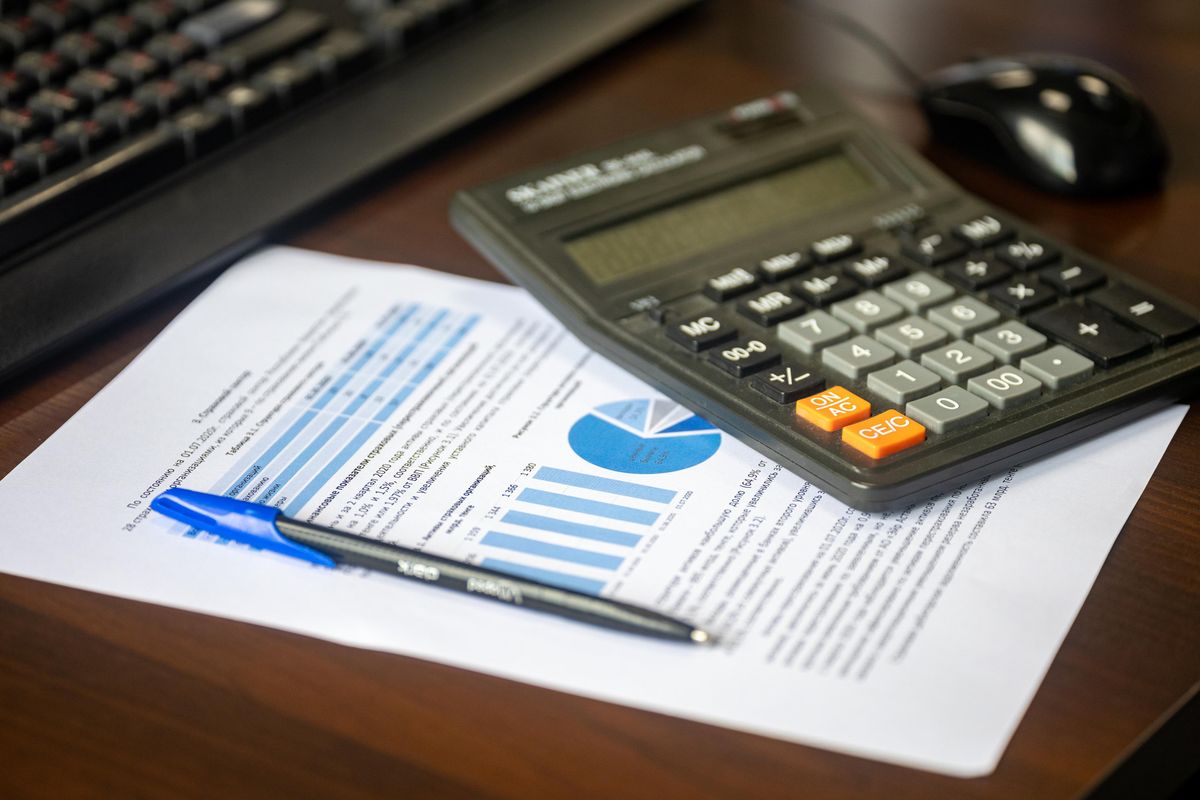

AI in logistics is the use of computer software to plan, move and track goods: from forecasting what customers will order, to choosing a delivery route, to picking items in a warehouse and giving a customer a delivery time. It works by studying past orders, stock levels, traffic, weather and vehicle data, then suggesting or carrying out the next step. A person still has to set the rules, check the results and handle the exceptions.
This article explains AI in logistics in plain terms: where it shows up first, forecasting and stock, warehouse work, routes and last-mile delivery, and a careful routine for a small business.
Where AI in logistics shows up first
Logistics is getting the right goods to the right place at the right time, whether that means one van and one stockroom or many warehouses and carriers. In both cases the same questions return: what will sell, where should stock sit, which route should a driver take, and what happens when a plan breaks.
AI in logistics enters through those repeated questions. It reads routine data faster than a person can, spots a pattern, and turns it into a suggestion: order more, move stock, send this van first, or warn a customer of a late delivery. DHL's Logistics Trend Radar 8.0, published in September 2026, describes this shift as AI moving from giving advice to planning, deciding and acting toward set goals, with AI analytics used to find patterns, forecast outcomes, anticipate disruption and recommend actions at scale.
The MIT Center for Transportation and Logistics 2026 State of Supply Chain Omnichannel Report shows how wide the use already is: customer experience at 64%, demand forecasting at 63%, warehouse management at 61%, inventory management at 60%, and transportation and fulfilment at 58% and 56%. The pressure behind that spread is clear in the same report: 81% of organisations were still seeing e-commerce growth, customers wanted faster and more reliable deliveries, and return rates ran as high as 40% in sectors such as fashion. McKinsey's 2025 survey of 300 distributors adds a warning: logistics optimisation ranked highest for AI impact, yet only 11% had fully adopted the technology and only 25% realised expected cost savings, despite 90% reporting AI initiatives.
Forecasting demand and placing stock
Forecasting is the first job, because every other logistics decision depends on it. A forecast is a reasoned guess about what will sell, where, and when. AI forecasting adds more inputs than last year's sales for the same month: recent sales by channel, promotions, prices, holidays, weather, and how fast stock has been moving. It weighs those inputs and produces a range of likely outcomes, rather than a single fixed number.
That range is useful. If a forecast says demand for one item could be anywhere from 80 to 140 units next month, a business can plan for the middle of the range and keep a buffer for the high end, instead of ordering 140 and tying up cash, or ordering 80 and running out. MIT's report puts demand forecasting among the most common AI uses, at 63%, and inventory management close behind at 60%.
Stock placement is the second part of the same job. A business selling online and in store faces a harder choice than a business with one stockroom: should an item sit in the main warehouse, a branch, or both? AI tools compare past orders by area, delivery costs, and how quickly each location can pick and pack, and can suggest moving slow items to one central point and fast items closer to the customers who buy them most. The FourKites and ABI Research survey of 490 supply chain professionals, published in October 2025, adds a warning: firms deployed AI heavily for demand forecasting, at 44%, and inventory management, at 41%, while only 37% deployed AI for risk management. Pair a forecast with a simple disruption plan: a second supplier, a rule for switching carrier, and a note of orders that must never be delayed without a phone call.
Inside the warehouse: picking, packing and machines
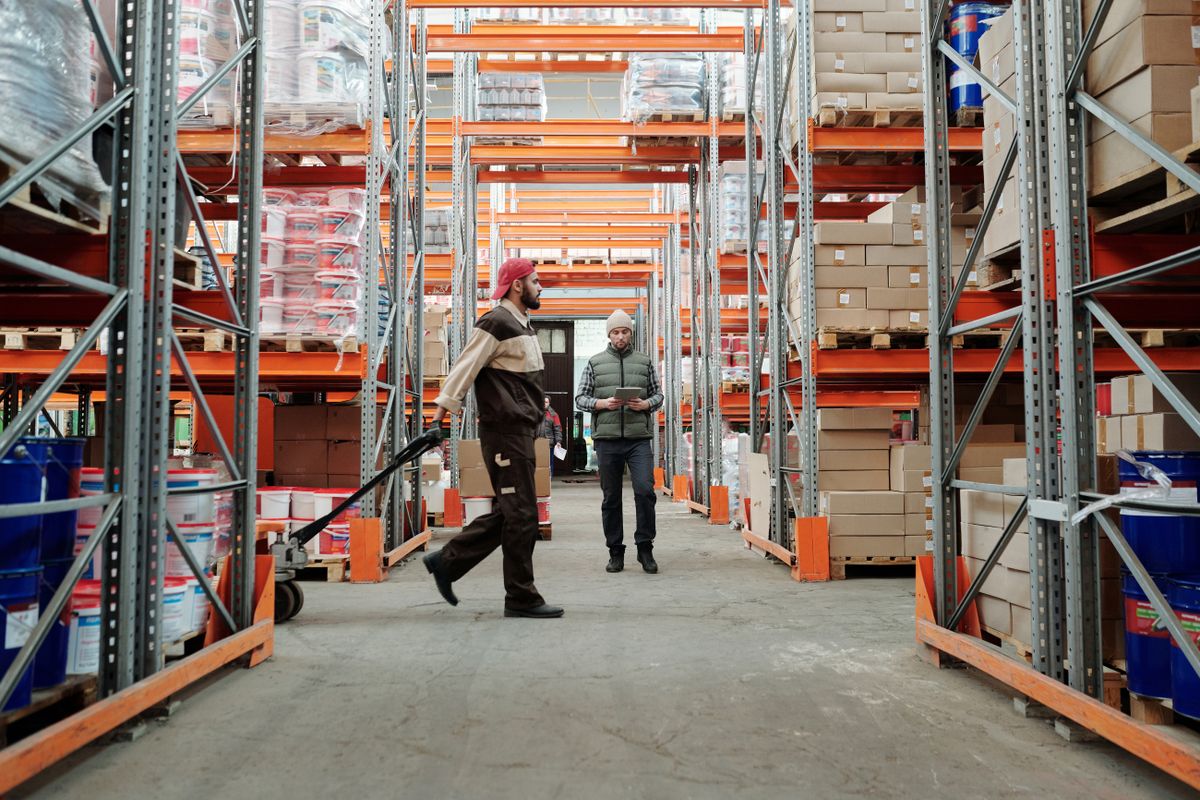
A warehouse is where a forecast meets physical work: orders arrive, items are picked, packed, labelled and handed to a carrier. AI usually works in three places: deciding work order, guiding people and machines to the right shelf, and checking the right item went into the right box. A tool can group orders sharing items into one trip and place fast items near the packing bench.
Computer vision, which is software that reads images from a camera, can check a label or a barcode and flag a mismatch before a parcel leaves. Predictive maintenance watches machine data for signs of wear so a repair can be booked before a breakdown stops work. MIT's report found autonomous mobile robots, small robots that move goods around a warehouse, cited as highly relevant by 63% of respondents, up from 50% the year before, while multi-shuttles, which move goods to a person, rose from 14% to 56%. Real-time inventory management was rated highly relevant by 59%.
Those figures describe larger operations first. The same ideas apply at a smaller scale: group similar orders, keep fast items close, check labels before sealing a box, and keep a live count of stock that everyone trusts. People remain central in DHL's account: its Radar 8.0 gives weight to workforce transformation, including wearable sensors, collaborative robotics and AI assistants, aimed at reducing strain, improving safety, and freeing staff for complex tasks.
Routes and last-mile delivery
The last mile is the final leg of a delivery, from a local depot or shop to the customer's door. A failed delivery means a second trip, a return, and a disappointed customer. Route optimisation means choosing the order of stops, not just the shortest road between two points. A good route weighs delivery windows, vehicle size, road restrictions, traffic, weather and how long each stop usually takes.
The World Economic Forum's January 2025 white paper on AI in global logistics explains that AI-driven systems use real-time data from GPS devices, traffic systems, weather forecasts and past route performance to adjust routes during the day. Route tools are often added to existing transport systems, and can be a practical first step.
An older, well-documented example shows what route maths can do. UPS built ORION, its On-Road Integrated Optimization and Navigation system, to work out the best delivery order for its drivers. Drexel University's LeBow College of Business reports that ORION evaluates more than 200,000 alternative ways to run a single route, and that it has led to an annual reduction of 85 million miles driven, 8 million gallons of fuel and 85,000 metric tons of carbon dioxide, with savings of more than $300 million per year, while being used on more than 70% of the company's routes in the United States. Those are UPS figures for a very large fleet. The point for a smaller firm is the method: test the order of stops against real data, including time at each door. The World Economic Forum paper adds that full-scale route optimisation could cut emissions by an amount equivalent to taking about 25% of United States heavy and medium-duty trucks off the road, and cites Greenplan, a DHL Express funded start-up, whose route tool could achieve up to 20% in fuel cost savings while using 70% less computing time.

Limits, risks and a careful routine for a small business
AI in logistics has clear limits. First, it is only as good as its data. If stock counts are wrong, addresses are incomplete, or past sales are mixed up across channels, the tool will produce confident but wrong suggestions. The FourKites and ABI Research survey points to a related problem: 46% cited legacy integration and tool fit as top workflow barriers, ahead of data quality as a secondary concern.
Second, autonomous action needs limits. DHL's Radar 8.0 asks who is accountable when an autonomous system decides, and what human oversight is still required? The FourKites survey gives the current answer in practice: only 27% of organisations allow AI to take autonomous action, while 52% limit it to decision support. For a small business, decision support is the safer starting point: let the tool suggest, and let a named person approve any change that affects a customer promise, a supplier payment or a delivery date.
Third, cost and scale can mislead. McKinsey's distributor survey found only 25% realised expected cost savings and only 31% realised expected revenue gains, even though 90% had AI initiatives. A small business should therefore judge a tool on one measured job, over a set period, with a clear before-and-after count: deliveries on time, miles driven, stockouts, returns, or hours spent on manual planning. Start with one job and fix its data first, write down who approves exceptions, and review the result after a month before extending the tool.
Frequently asked questions
Does AI in logistics replace drivers and warehouse staff?
No. AI in logistics plans routes, groups warehouse tasks and forecasts demand, but drivers still handle roads, customers and exceptions, and warehouse staff still handle goods, checks and problems the system cannot see. DHL's Radar 8.0 stresses workforce change alongside the technology.
What is the safest first AI job for a small delivery business?
Start with route order and stock counts, because both can be measured each week. Fix addresses and stop times, group stops by area, and keep a live stock count that everyone trusts. Move to forecasting only after that routine works.
Why do some AI logistics projects fail to save money?
Often because the data or the daily routine was not ready, or because the tool was judged on a vague goal instead of a counted result. McKinsey's 2025 distributor survey found only 25% realised expected cost savings, while 90% had AI initiatives. A single measured job and a named approver give a project a fair test.
AI in logistics is most useful as a careful helper for forecasting, stock placement, warehouse work and route planning, checked by people who own the customer promise. Fix the data for one job first, measure the result, and extend the tool only when the first job earns it.
If your small business wants help turning delivery, content or customer follow-up into a clear system, Eri-Tech Global Ltd can help. See our services at /services, or talk to us at /contact.
What to watch next
Watch three things next. First, whether more firms move from decision support to autonomous action, given that only 27% in the FourKites survey allow it today. Second, how DHL's Radar 8.0 trends show up in tools a small firm can buy and connect. Third, whether route and warehouse results stay measurable as tools spread.
Sources
- DHL — AI is rewiring logistics. Are you ready to lead the change? — date checked: 2026-11-05 — https://www.dhl.com/global-en/delivered/global-trade/ai-is-rewiring-logistics-is-your-workforce-ready.html
- MIT Center for Transportation and Logistics — AI Is "Not Optional Anymore" in Omnichannel Supply Chains, New MIT CTL Research Finds — date checked: 2026-11-05 — https://ctl.mit.edu/news/ai-not-optional-anymore-omnichannel-supply-chains-new-mit-ctl-research-finds
- FourKites and ABI Research — FourKites & ABI Research Release Report on Supply Chain AI — date checked: 2026-11-05 — https://www.fourkites.ai/press/fourkites-abi-research-release-report-supply-chain-ai
- McKinsey & Company — AI in distribution: driving digital transformation today — date checked: 2026-11-05 — https://www.mckinsey.com/industries/industrials/our-insights/where-value-is-won-and-lost-in-distribution
- World Economic Forum, in collaboration with McKinsey & Company — Intelligent Transport, Greener Future: AI as a Catalyst to Decarbonize Global Logistics — date checked: 2026-11-05 — https://reports.weforum.org/docs/WEF_Intelligent_Transport_Greener_Future_2025.pdf
- Drexel University LeBow College of Business — UPS: A Technology Company with Trucks — date checked: 2026-11-05 — https://www.lebow.drexel.edu/news/ups-technology-company-trucks

Eri-Tech Global Ltd
Eri-Tech Global Ltd is a digital solutions company working with small businesses and growing brands. Learn more at /about.