

AI in insurance is already at work on the two questions every policyholder cares about: what cover costs, and how fast a claim is paid. When you buy car insurance online, renew a home policy or photograph a dented bumper for a claim, a computer model has usually read your details before a person does.
The change is now broad. EIOPA, the European insurance supervisor, surveyed 347 insurers across 25 countries and found 65% already using generative AI, with a further 23% planning to use it within three years. An earlier EIOPA report found half of non-life insurers and a quarter of life insurers were already using AI in pricing, underwriting, fraud detection or claims.
This guide explains what those systems do at each step — setting a price, handling a claim, catching fraud — where they fall short, and the rules that now apply.
How AI sets the price of your cover
Underwriting is the insurer's name for judging a risk and setting a price for it. For decades it ran on actuarial tables: age, postcode, past claims and the type of car or house. A model adds more signals to that same job, and weighs them faster than a team of people could.
The Association of British Insurers (ABI) describes personalised pricing in its AI guide: a model can read an individual's data — driving behaviour, health and more — and offer a premium matched to that person's risk profile. Predictive underwriting can also offer tailored policies to people who might otherwise have been turned down. In life insurance, that can mean a policy issued without a medical exam, with the model reading application data and outside records instead.
Motor insurance shows the idea most clearly. Telematics — a small device or phone app that records how a car is driven — lets an insurer coach a driver in real time and recalculate the price as driving changes. McKinsey describes a future of "premium per minute" of driving, and notes that nearly half of customers in North America already use AI somewhere in their personal insurance-buying journey, from research to purchase.
Property insurance uses a similar trick from above: some insurers buy aerial photographs that computer models check for a damaged roof or overhanging trees, so the price matches the actual property rather than the average one on the street.
Finer pricing cuts both ways. A careful driver or a well-kept house can pay less; a driver with a poor record, or a home in a flood-prone area, can pay more or find cover harder to get. A model is only as fair as the data it learned from.
What happens when you make a claim
Claims are where insurers are putting generative AI to work fastest. EIOPA's survey found customer service, claims management, and sales and distribution are the most active areas, and most of the work sits behind the scenes: 64% of use cases are for internal back-office jobs, against 36% that face the customer.
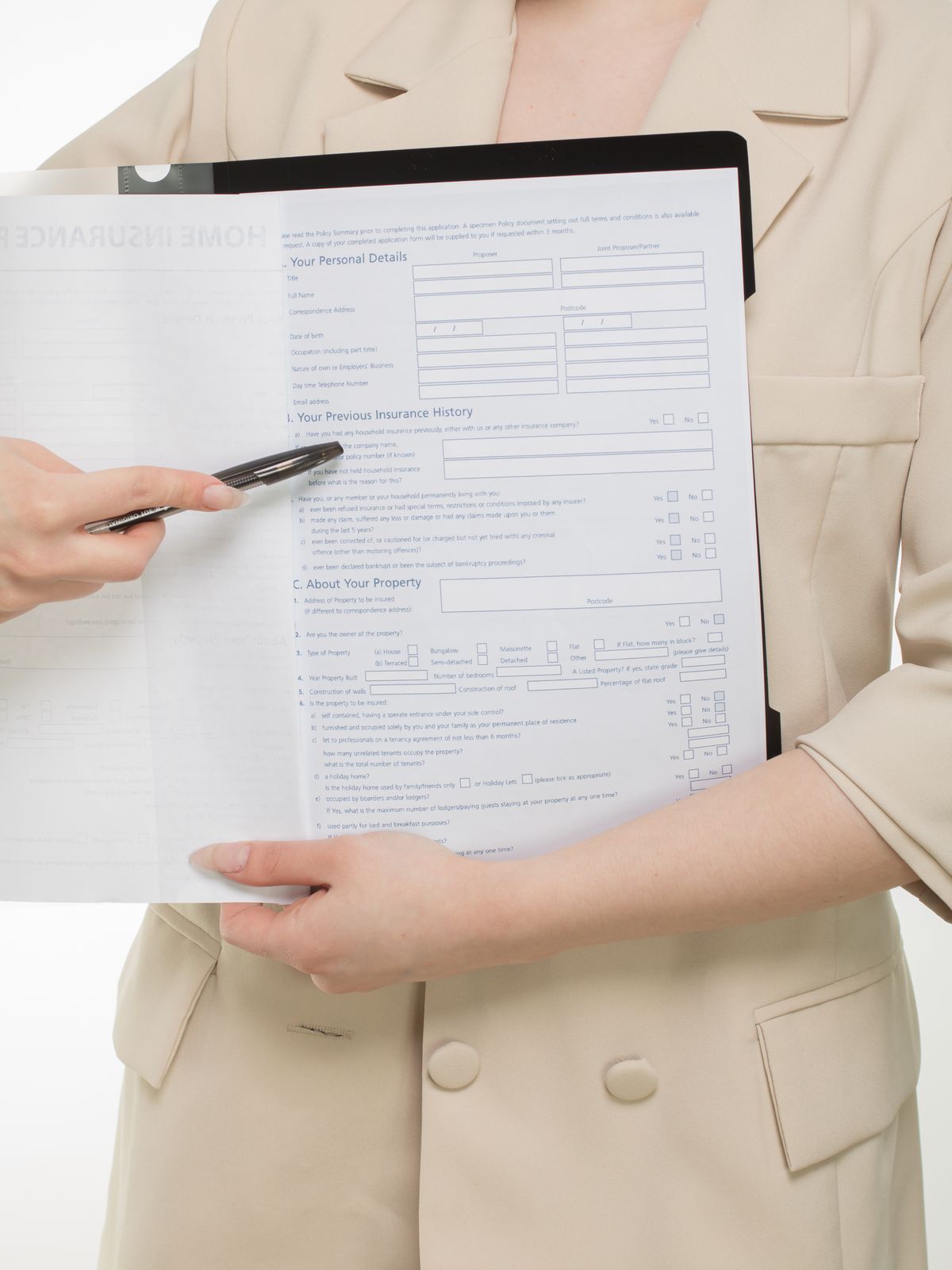
A typical AI-assisted claim runs like this. You photograph the damage and upload it through the insurer's app. A model reads the photo, estimates the repair cost and checks the damage against the policy wording. A simple claim — a cracked windscreen, a small dent — can be approved and paid without a person touching the file, while a larger or unclear claim goes to a handler with the model's reading attached.
The same tools read the paperwork around a claim. EIOPA's survey records insurers using generative AI to pull facts from invoices and medical reports, and to turn recorded calls into short summaries a handler can act on. McKinsey reports AI-led changes are already cutting customer onboarding costs by 20 to 40% and lifting agent productivity by 10 to 20%.
Testing is still where most of it sits: EIOPA found 64% of generative AI use cases are at the proof-of-concept stage, and only 32% have reached production. Human oversight still dominates — the survey describes current systems as "assisted" models that need a person to check the output.

How insurers catch fraud
Fraud is the clearest win for AI in insurance, and the numbers show why insurers care. The ABI reported that UK insurers found £1.16 billion of dishonest general insurance claims in 2024, up 2% on the year before, across more than 98,400 claims. Motor fraud was the largest share, at 51,700 scams worth £576 million, and property fraud added 18,700 claims worth £189 million. The most common type was exaggerated loss — inflating a real claim — worth £466 million.
A model spots fraud by comparing a claim with thousands of others. One that breaks the usual pattern — a repair bill far above the norm, a claimant linked to earlier suspect claims, a policy taken out days before a large claim — gets flagged for a person to check. The same checks run at the start: insurers stopped an estimated 684,800 fraudulent applications in 2024, where key facts were hidden when the policy was bought.
Insurers plan to push this further than any other use. EIOPA's survey found fraud detection is the area with the highest planned future adoption of generative AI. The ABI adds a warning of its own: fraudsters are taking "more sophisticated, agile approaches, aided by AI", so the same tools that catch a false claim are also being used to write one.
Honest customers have a direct stake: the ABI says fraud drives up premiums for everyone. Every false claim an insurer pays for is spread across the premiums of people who never claimed.
Where AI gets it wrong
The most-cited risk in EIOPA's survey is not bias or job losses. It is wrong answers: insurers named inaccurate outputs — "hallucinations", where a generative model invents facts — as the top risk, ahead of cybersecurity, data protection and a lack of explainability.
Bias is the risk regulators watch closest. A model trained on past decisions can learn the patterns in that data, including any that disadvantaged some groups of customers. The NAIC, the association of US state insurance regulators, lists the risks plainly in its AI bulletin: inaccuracy, unfair discrimination, data vulnerability, and a lack of transparency and explainability. A wrong price or a refused claim is hard to challenge when no one can explain how the model reached it.
A third problem is shared weakness. Most insurers do not build their own large models: EIOPA found the dominant approach is to buy ready-made tools or build on a third party's model. When many insurers rely on the same few providers, a flaw in one model can show up in many firms at once.
The rules insurers must follow
Regulators on both sides of the Atlantic have answered the same question in the same way: the old rules still apply, and AI does not excuse a firm from them. In the United States, the NAIC adopted a model bulletin on AI in December 2023. It tells insurers that decisions made or supported by AI must follow existing insurance law, including the rules against unfair trade practices and unfair discrimination, and that rates must not be excessive, inadequate or unfairly discriminatory.
The bulletin expects every insurer to keep a written AI systems programme covering governance, risk controls and internal audit, with testing for errors and bias and checks on outside vendors. Each state insurance department issues the model on its own, so it takes effect state by state.
In the European Union, the AI Act adds a risk-based layer. EIOPA notes that in insurance the Act treats only pricing and risk assessment in life and health insurance as high-risk, while the sector's own insurance rules continue to apply to everything else. High-risk systems carry duties on risk management, data governance, record-keeping, human oversight and security.
In Britain, the ABI published an AI guide in February 2024 that walks firms through responsible use, from product design to claims, against the UK's five AI principles and existing duties such as the Financial Conduct Authority's Consumer Duty, data protection law and the Equality Act. The message is the same everywhere: a person must be accountable, the decision must be explainable, and the customer must be treated fairly.
Frequently asked questions
Does AI decide whether I get insurance?
Not on its own, in most cases. EIOPA's survey found human oversight still dominates, with most systems working as "assisted" tools that support a person. In the EU, pricing and risk assessment in life and health insurance are classed as high-risk, which brings duties on human oversight. In the US, an insurer using AI must still follow the existing laws against unfair discrimination.
Can AI make my claim faster?
For simple claims, yes: a photo-based claim can be checked against the policy and approved without a person touching the file. But most generative AI use is still being tested — only 32% of use cases in EIOPA's survey had reached production — so speed still depends on the insurer and the claim.
Will AI make my premium cheaper?
Not necessarily. More precise pricing can cut the price for lower-risk customers and raise it for higher-risk ones. McKinsey reports AI-led changes are already cutting customer onboarding costs by 20 to 40%, but savings inside an insurer do not automatically reach the premium you pay.
AI in insurance is not one system. It is a set of tools that price a risk, read a claim, and check a story against thousands of others. Adoption is broad and fraud detection is sharper, while most uses are still being tested and wrong answers are the top-cited risk.
If you hold a policy, read the summary of what you are covered for before you need it, keep photos and receipts when you claim, and ask for the reason in writing if a price or a claim decision surprises you. If you run a small business and want help explaining a technical product in plain words, see our AI content writing and digital solutions services, or get in touch through our contact page.
What to watch next
Watch EIOPA's next survey for whether the share of generative AI use cases in production climbs past 32%, and whether fraud detection moves from testing to everyday use. Watch how the EU AI Act's high-risk duties for life and health insurance pricing are applied, and whether more US states issue the NAIC's model bulletin. And watch the ABI's next fraud figures: if AI detection keeps improving, the £1.16 billion found in 2024 should fall — unless fraudsters using the same tools keep pace.
Sources
- EIOPA — Generative AI Market Survey: Outlook, Use Cases and Risk Management — date checked: 2026-11-07 — https://www.eiopa.europa.eu/document/download/bec886e2-dea0-4bbe-9624-d5f23f85700a_en?filename=EIOPA-BoS-25-679-GenAI-Report.pdf
- EIOPA — From "Traditional AI" to "Generative AI": Implications for the Insurance Sector — date checked: 2026-11-07 — https://www.eiopa.europa.eu/publications/traditional-ai-generative-ai-implications-insurance-sector_en
- Association of British Insurers — AI Guide: Practical ideas for getting started with responsible AI — date checked: 2026-11-07 — https://www.abi.org.uk/globalassets/files/subject/public/ai/ai-guide.pdf
- National Association of Insurance Commissioners — Model Bulletin on the Use of Artificial Intelligence Systems by Insurers — date checked: 2026-11-07 — https://content.naic.org/sites/default/files/inline-files/2023-12-4%20Model%20Bulletin_Adopted_0.pdf
- Association of British Insurers — Fraudulent insurance claims continue to top £1 billion — date checked: 2026-11-07 — https://www.abi.org.uk/media-hub/news-post/fraudulent-insurance-claims-continue-to-top-1-billion
- McKinsey & Company — How AI will reshape the economics of insurance: A CEO's guide to strategy — date checked: 2026-11-07 — https://www.mckinsey.com/industries/financial-services/our-insights/how-ai-will-reshape-the-economics-of-insurance-a-ceos-guide-to-strategy

Eri-Tech Global Ltd
Eri-Tech Global Ltd is a digital solutions company working with small businesses and growing brands. Learn more at /about.