

AI in retail is software that reads a shop's sales records, stock levels and shopper behaviour, then turns what it finds into decisions: what to order, what to show each shopper, how to answer a question, and how to take payment. It is not one tool, but a set of tools inside the till system, the website and the stockroom, each doing a narrow job.
The shift is now hard to miss. In NVIDIA's third annual survey of retail and consumer goods companies, published in January 2026, 91% of respondents said their companies were using AI or assessing it, and 89% said it was helping to raise annual revenue. This guide covers the four jobs where it does the most useful work, where it falls short, and how a small retailer can start.
Guessing less about what to stock
A shop's oldest problem is ordering: too much of what does not sell, too little of what does. A forecast built by hand usually looks at last year's sales for the same weeks. A machine-learning model can read far more at once: sales by day and by store, promotions, prices, seasons and weather, then work out how much of each product each shop is likely to sell.
Deloitte's 2026 Retail Industry Global Outlook, based on a survey of 330 retail executives, found that 30% of retailers already use AI for supply-chain visibility, expected to climb to 41% within the next year. The same survey found 59% of executives expect a positive return from AI supply-chain work within 12 months. The models do not remove the guesswork, but they narrow it and update as new sales come in.
The same thinking applies to the shelves. AI stock tools watch how fast each product sells, what is left and supplier lead times, then suggest what to reorder and when. McKinsey's work on the subject, quoted by Shopify, puts the saving at 20% to 50% of stock-holding costs, mostly by catching slow stock before it is written off. For a small shop, the useful version is modest: a weekly list of the fastest sellers and the stock that has not moved in 60 days.

Showing each shopper a different shop
Walk into a shop and the shelves are the same for everyone. Open the same shop's website and AI can change what each visitor sees: the products at the top of the search results, the items suggested beside a product, the email after a purchase. The model reads browsing, past purchases and what similar shoppers bought, then ranks the catalogue for that person.
Shoppers have come to expect this. McKinsey's research on personalisation found that 71% of consumers expect companies to deliver personalised interactions, and 76% get frustrated when that does not happen. The same research found personalisation can halve the cost of finding a new customer and lift revenues by 5 to 15%. BCG's work points the same way: its personalisation leaders grow revenue 10 percentage points faster than the firms behind them.
Deloitte's 2026 outlook shows how far this has spread: a quarter of retailers already use AI personalisation, another 35% expect personalised AI recommendations within a year, and 67% expect it in place within the year. There is a line to respect, though: McKinsey's explainer notes that 85% of customers say knowing a company's data privacy policies matters before they buy, so personalise from what the shopper has willingly shared and say plainly how to opt out.
Answering questions without a queue
Most of the questions a shop gets are the same ones, asked all day: opening hours, whether an item is in stock, where an order is, how to return something. A chat tool built on a language model can answer those in seconds, day and night, from the shop's own catalogue and policy pages. Staff then handle the questions that need judgment: a complaint, a damaged delivery, a gift choice.
The newest version is the shopping assistant that lives inside a chat app or search tool rather than on the shop's own site. Deloitte's outlook notes that referral traffic from ChatGPT and other AI chats already accounts for 15% to 20% of total referrals for some retailers, and nine in 10 executives expect AI to be used increasingly over search engines during 2026. The first conversation about a product may soon happen away from the shop's website, so product details have to be accurate and readable by those tools.
Agentic AI goes further: instead of only answering, it acts — adjusting a promotion, moving stock between stores, or drafting a reply for approval. NVIDIA's survey found 47% of retail and consumer goods companies are using or assessing agentic AI. Deloitte puts the same shift at 68% of retailers expecting to deploy it for key work within 12 to 24 months. Shoppers still want a person within reach: Gartner found that 87% of customers consider access to a human agent essential when companies use generative AI for service.
Checkout that gets out of the way
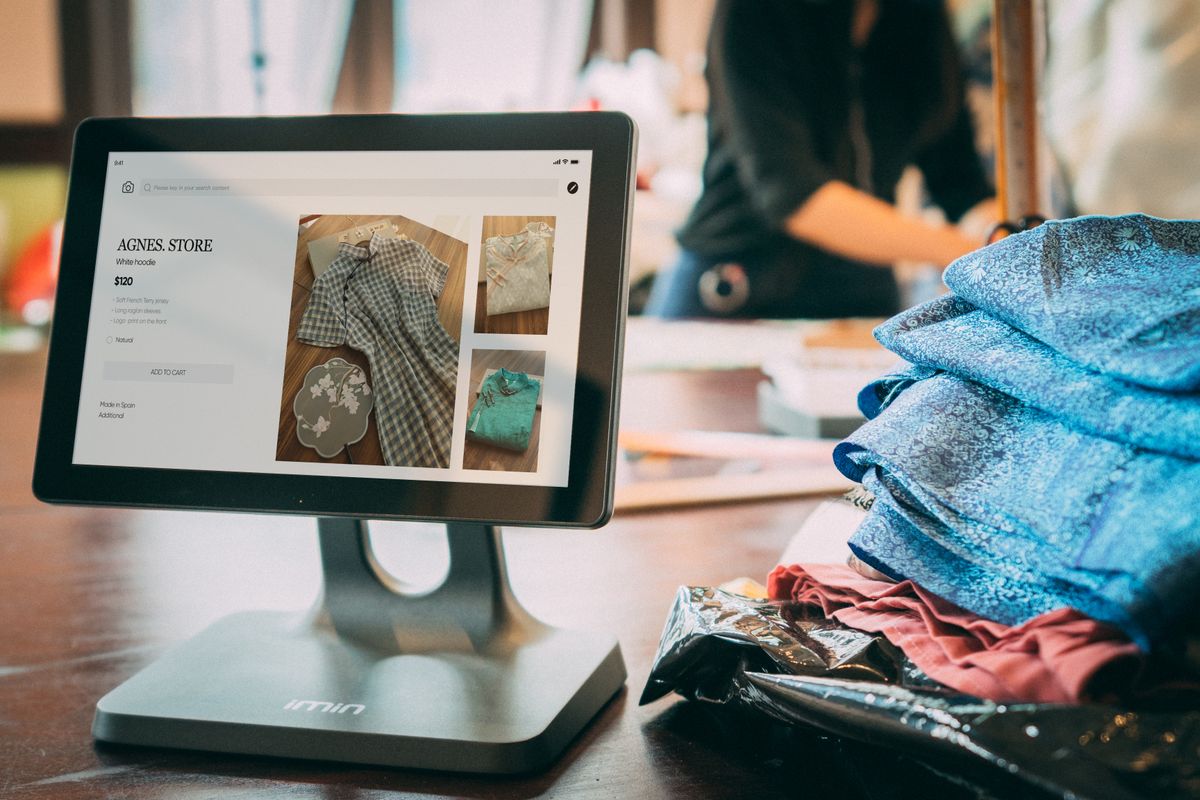
The last step of a sale is also the easiest place to lose it. Long queues, a till that only takes cash, or a payment page that asks twice for the same details will send a shopper away. AI helps here in quiet ways: a phone or tablet that takes payment anywhere on the shop floor, and fraud checks that run in the background instead of blocking a genuine buyer.
Self-checkout is now a normal choice. A 2026 Verifone and FreedomPay survey found 45% of consumers prefer self-checkout, and 75% say checkout options influence where they shop. Computer vision adds another layer: cameras paired with AI models can follow items from shelf to basket and flag a missed scan.
The best-known test of checkout without tills is Amazon's Just Walk Out, which used cameras, sensors and deep-learning tools to sense what a shopper took from the shelf. In April 2024, Amazon removed it from all of its Amazon Fresh grocery stores in the United States and rolled out Dash Carts instead — smart carts that scan items as shoppers place them in the basket and show a running total. Shoppers had liked skipping the queue, Amazon said, but they also wanted to see their receipt as they shopped and know how much they had saved. The technology stayed in Amazon Go stores and some smaller Fresh stores in the UK.
Where it goes wrong, and who stays in charge
For all the uptake, most retailers cannot yet say what AI returns. Deloitte calls this the say-do gap: in its research, 75% of retail and consumer goods executives rank AI as a top strategic priority, while only 16.5% can quantify a return. The gap is rarely the model. It is the work around the model: messy data, old systems, and no baseline to measure against; 44% of retailers say their legacy systems are slowing innovation.
The fix is unglamorous. Pick one decision the business makes every week, give it an owner and a baseline number — stockouts, forecast error, time to answer a question — then measure the same number after a month of using the tool. If the number does not move, the data or the workflow is the problem to solve first, not the tool.
There are also rules to follow. The National Retail Federation, the largest retail trade group in the United States, published principles for AI in retail built around four areas: governance and risk management, customer engagement and trust, workforce use, and accountability from business partners. In plain terms: decide who is responsible for each AI tool, be open with customers about AI that affects them in a legal or similarly serious way, guard against unlawful discrimination, and keep human oversight over tools that affect staff. Staff are part of that picture too: AI takes the repetitive checks and leaves the work that needs a person — reading a customer's mood and deciding when a rule should bend.
Frequently asked questions
Can a small shop use AI in retail?
Yes, and most already do without realising it: the recommendation block on a website, the stock alerts in a till app, and the spam filter on the shop's email are all AI. The practical start is one tool for one job — a weekly reorder list for the best sellers, say — using sales records the shop already keeps. A small budget is less of a barrier than messy records: a month of clean sales and stock figures in one place is the real starting cost.
Does AI in retail replace shop staff?
It replaces tasks, not people. Counting stock, answering the same five questions and drafting a first product description are jobs a tool can take. Judging a complaint, calming an unhappy customer, and choosing the right product for a particular person still need a person — and Gartner's finding that 87% of customers want access to a human agent shows shoppers expect that. The sensible plan is to move staff hours from routine checks to the counter and the shop floor.
What should a retailer try first?
Start with the job that costs the most time or money: usually forecasting the best sellers or answering routine questions. Write down the current number — how often a best seller runs out, or how long a question waits for an answer — then run the tool for a month and compare. Keep a person checking the results each week, and widen the trial only when the number moves in the right direction.
AI in retail is at its best when it does a narrow job well: a sharper forecast, a more relevant suggestion, a faster answer, a shorter queue. Nine in ten retail and consumer goods companies are already using or assessing it — but the gains go to the shops that pick one measurable job, feed it clean data, and keep a person in charge.
Pick one job this week, note the baseline, and try it for a month. If you want help choosing the tool or setting up the first trial, Eri-Tech Global Ltd can help — see our AI automation and digital solutions services, or get in touch through our contact page.
What to watch next
Three things to watch over the next year: whether AI shopping assistants become a real sales channel, with Deloitte expecting 68% of retailers to deploy agentic AI within 12 to 24 months; whether shoppers keep buying through chat tools, where referral traffic already reaches 15% to 20% for some retailers; and how the National Retail Federation's principles become practical standards for small retailers. The test stays the same: does the shop run better, and does the customer feel looked after?
Sources
- NVIDIA — From Warehouse to Wallet: New State of AI in Retail and CPG Survey Uncovers How AI Is Rewiring Supply Chains and Customer Experiences — date checked: 2026-11-06 — https://blogs.nvidia.com/blog/ai-in-retail-cpg-survey-2026/
- Deloitte — 2026 Retail Industry Global Outlook — date checked: 2026-11-06 — https://www.deloitte.com/content/dam/assets-zone2/it/it/docs/industries/consumer/2026/2026-Retail-Industry-Global-Outlook_Deloitte.pdf
- McKinsey & Company — What is personalization? — date checked: 2026-11-06 — https://www.mckinsey.com/~/media/mckinsey/featured%20insights/mckinsey%20explainers/what%20is%20personalization/what-is-personalization.pdf?community_post=true
- Shopify — AI in Retail: Use Cases and Implementation Guide (2026) — date checked: 2026-11-06 — https://www.shopify.com/za/enterprise/blog/ai-in-retail
- Retail Dive — Amazon removes 'Just Walk Out' tech from US Amazon Fresh stores — date checked: 2026-11-06 — https://www.retaildive.com/news/amazon-removes-just-walk-out-tech-amazon-fresh-stores-dash-carts/712150/
- Home Textiles Today — Confounded by AI risks? The NRF issues guidelines for retailers — date checked: 2026-11-06 — https://www.hometextilestoday.com/technology/the-nrf-just-released-4-guiding-principles-for-retailer-artificial-intelligence-use/
- CMSWire — Gartner Survey Finds 87% of Customers Say Companies Using GenAI for Customer Service Must Provide Access to a Human Agent — date checked: 2026-11-06 — https://www.cmswire.com/the-wire/gartner-survey-finds-87-of-customers-say-companies-using-genai-for-customer-service/

Eri-Tech Global Ltd
Eri-Tech Global Ltd is a digital solutions company working with small businesses and growing brands. Learn more at /about.